
Minnesota POST Compliance in 2026: What Every Law Enforcement Agency Needs to Know
Published April 2026 · ConfiTrek Research Series · Estimated read time: 7 min
For law enforcement agencies across Minnesota, compliance with Peace Officer Standards and Training (POST) requirements is not optional — it is a legal obligation with real consequences for officers, departments, and the communities they serve. Yet for many chiefs, training coordinators, and department administrators, staying on top of the state’s evolving mandates remains one of the most administratively intensive responsibilities in their portfolio.
This guide cuts through the complexity. We cover what Minnesota POST requires in 2026, what has changed in recent years, where agencies most commonly fall short, and what a state compliance audit actually looks like. Whether your department has ten officers or three hundred, these requirements apply equally.
What Is the Minnesota POST Board?
The Minnesota Board of Peace Officer Standards and Training (POST Board) is the state agency responsible for setting the minimum standards for the licensing of peace officers in Minnesota. It establishes licensing requirements, continuing education mandates, curriculum standards, and the procedures through which agencies report officer training activity. The POST Board also oversees the reimbursement of eligible training expenses to local agencies — a program that reduces financial barriers to compliance but requires accurate record-keeping to access.
The Board licenses approximately 11,000 active peace officers across the state and has authority to revoke or suspend licenses for officers and agencies that fail to meet its standards. Compliance is not a bureaucratic formality — it is a condition of a license to operate.
Core Continuing Education Requirements in 2026
Minnesota law requires all licensed peace officers to complete a minimum number of continuing education hours within each license period. The core requirements as of 2026 include:
- 48 continuing education credits required per three-year licensing period for all licensed peace officers
- At least 16 of those credits must be completed within each year of the three-year cycle — officers cannot front-load or back-load all credits into a single year
- 6 hours of crisis intervention training (CIT) are required per licensing cycle, effective for cycles beginning after July 1, 2020
- Implicit bias and community policing training is required, with curriculum standards set by the POST Board
- Use of force and de-escalation training must be completed within each licensing period, with specific curriculum requirements updated following 2020 legislative changes
- Mental illness response training is required for all licensed officers
Training Topics Added or Expanded Since 2020
Minnesota’s legislative response to officer-involved incidents in 2020 and subsequent years significantly expanded POST training requirements. Agencies that built their compliance programs prior to 2020 and have not updated them are at high risk of non-compliance. Key additions and expansions include:
| Training Topic | Requirement Status | Notes |
|---|---|---|
| De-escalation techniques | Mandatory, annual | Must include scenario-based components per POST curriculum |
| Use of force — proportionality and duty to intervene | Mandatory, each licensing period | Expanded curriculum post-2020; includes duty-to-intervene obligation |
| Implicit bias training | Mandatory, each licensing period | Curriculum must be POST-approved |
| Mental illness response | Mandatory, each licensing period | 8-hour minimum; CIT certification satisfies requirement |
| Crisis intervention training (CIT) | Mandatory — 6 hours per cycle | 40-hour full CIT certification exceeds minimum requirement |
| Disability response training | Mandatory, licensing period | Added as a distinct required topic |
| Community policing principles | Required component | Must be embedded in continuing education curriculum |
The POST Reimbursement Program: What You Can Recover
One of the most practical aspects of Minnesota POST compliance is the state’s reimbursement program for eligible training expenses. The POST Board reimburses agencies for peace officer continuing education costs at a set rate per training hour, up to applicable caps. Agencies can recover costs for:
- Tuition, registration, and course fees for POST-approved continuing education
- Salary and overtime costs for officers attending training during duty hours or extra duty
- Travel and accommodation costs within certain limits
- Training materials and equipment expenses related to POST-approved courses
To access reimbursement, agencies must submit documentation through the POST Board’s portal — including officer attendance records, course completion verifications, and expense receipts — within the applicable filing window. Agencies that fail to maintain accurate training records throughout the year often scramble at filing time and leave money on the table. The annual reimbursement form is notoriously time-consuming to complete manually; training coordinators at agencies using spreadsheets report spending 20 to 40 hours per year on this single task.
Civilian Employees: The Often-Missed Obligation
A common compliance gap in Minnesota agencies involves civilian employees — dispatchers, records staff, evidence technicians, and community service officers. Minnesota law imposes separate training requirements for civilian employees who work in law enforcement roles, and these requirements are distinct from peace officer POST mandates. Dispatch personnel, in particular, are subject to Emergency Communications Center (ECC) certification and continuing education requirements maintained through a separate regulatory framework. Agencies that track only licensed peace officer compliance are exposing themselves to audit risk on the civilian side of their roster.
Common Compliance Failures in Minnesota Agencies
Based on patterns in state audit findings and the operational experience of training coordinators, the most common POST compliance failures in Minnesota agencies fall into the following categories:
- Officers completing the required 48 credits but failing to meet the per-year minimum of 16 credits in each year of the cycle
- Use of force or de-escalation courses completed that do not meet the updated POST curriculum standards
- Training records stored across multiple systems (spreadsheets, paper files, email threads) that cannot be quickly assembled for an audit
- New officers not enrolled in the compliance tracking system promptly upon hire, creating gaps in their three-year cycle record
- Civilian employee training tracked separately — or not at all — from peace officer compliance
- POST reimbursement forms filed late or incompletely due to disorganized expense records
What a POST Compliance Audit Looks Like
While the POST Board conducts targeted audits rather than annual universal reviews, the risk of audit increases following a complaint, an officer-involved incident, or a licensing renewal review. When an audit is initiated, agencies are typically required to produce:
- Rosters of all licensed peace officers active during the audit period
- Training completion records for each officer, organized by licensing cycle
- Course approval documentation confirming that completed training was POST-approved
- Evidence of compliance for each mandatory topic (use of force, CIT, implicit bias, etc.)
- Documentation of any training waivers or extensions requested
Agencies using spreadsheets or paper-based systems consistently report the same problem: the data exists, but it is scattered, inconsistently formatted, and takes days to assemble. The audit itself is not the problem — the disorganization of records is. Agencies that maintain a real-time, centralized compliance record can typically respond to an audit request within hours.
How ConfiTrek Keeps Minnesota Agencies Audit-Ready, Year-Round
ConfiTrek was built specifically for the compliance complexity that Minnesota law enforcement agencies face. The platform has Minnesota POST requirements built in — mandatory topics, per-year minimums, licensing cycle tracking, and curriculum compliance verification are all managed automatically, not manually.
- Minnesota POST mandated training requirements pre-loaded and monitored for regulatory changes
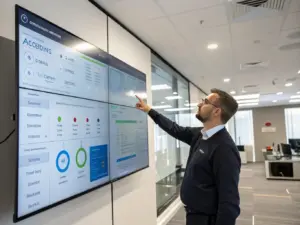
- Per-officer and per-organization compliance dashboards updated in near real-time
- Automatic notifications to officers and coordinators as training deadlines approach
- POST Reimbursement Auto-Complete feature that assembles your annual reimbursement form in a fraction of the time — saving agencies 40+ hours per year
- Civilian employee compliance tracked alongside licensed peace officer records in one system
- Full audit-ready reporting: export compliance documentation in CSV, Excel, or PDF at any time
Rachel Meehan, Captain at Minnetonka PD, called ConfiTrek “very intuitive and easy to use” and noted that completing the MN POST Reimbursement Form is now “as easy as a few keystrokes.” Ted Berg, Sergeant at Blaine PD, estimated the reimbursement auto-complete feature alone saves his department 40 hours of labor annually.
Schedule a Demo →