What Is a Training Compliance Management System? A Buyer’s Guide for Law Enforcement
Published April 2026 · ConfiTrek Research Series · Estimated read time: 8 min
At some point, almost every law enforcement training coordinator reaches the same conclusion: the spreadsheet is not working anymore. Maybe it is the POST reimbursement form that takes three days to complete every year. Maybe it is the officer whose training deadline was missed because the deadline was buried in a color-coded cell that nobody checked. Maybe it is the audit notice that arrived with a 72-hour response window and revealed how disorganized the records actually were. Whatever the trigger, the conclusion is the same: we need a better system.
The market for law enforcement training compliance software has grown considerably in recent years, which is good news for agencies seeking solutions — but it also means that the range of options, capabilities, and vendor claims has become more complex to navigate. Not every system described as “training management software” is designed for law enforcement compliance. Not every platform that tracks certifications understands POST requirements. And not every vendor that serves public safety agencies has built their product around the specific, granular compliance obligations that law enforcement faces.
This guide explains what a training compliance management system is, what its essential components are, how to distinguish law enforcement-specific platforms from generic tools, and what questions to ask during the evaluation process to ensure you select a system that will actually solve your compliance problems.
What a Training Compliance Management System Is (and Is Not)
A training compliance management system (TCMS) is purpose-built software designed to track, report, and manage the training obligations of an organization’s workforce — in this case, a law enforcement agency’s sworn officers and civilian employees. At its core, a law enforcement TCMS must do several things that distinguish it from generic HR software, general learning management systems (LMS), or standard compliance tools:
- Jurisdiction awareness: It must understand and apply your state’s specific POST requirements — the exact CE hours required, the mandatory topic categories, the per-year minimums if applicable, and the licensing cycle structure. A generic LMS tracks course completions. A law enforcement TCMS evaluates whether those completions satisfy specific regulatory standards.
- Multiple credential types: It must track not just state-mandated training but also organization-specific credentials (TASER instructor, firearms qualifications, K9 handler certification) and policy acknowledgements — managing all three tracks in one unified compliance picture.
- Real-time compliance status: It must provide current compliance status for every officer and every civilian employee at any moment — not a snapshot from the last time records were manually updated.
- Audit-ready documentation: It must produce compliance reports in formats that satisfy state audit requirements and legal discovery standards — quickly, completely, and without manual assembly.
The Five Core Capabilities of a Law Enforcement TCMS
When evaluating any training compliance management system for law enforcement use, these five capabilities are non-negotiable. A platform that excels in some but lacks others will leave material compliance gaps:
| Core Capability | What It Does | What Happens Without It |
|---|---|---|
| State POST requirement integration | Pre-built, maintained state compliance rules applied automatically per officer and jurisdiction | Coordinators manually translate POST rules into tracking logic; errors accumulate; regulatory changes are missed |
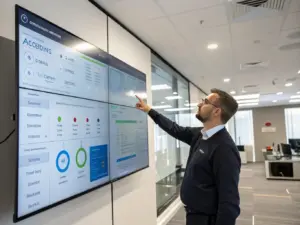
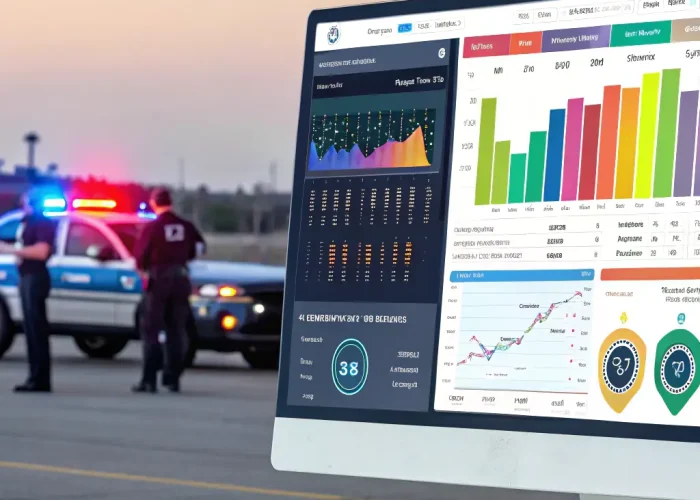
| Real-time compliance dashboards | Current compliance status per officer and organization, always visible | Compliance status known only at last manual update; gaps discovered too late to correct |
| Automated notifications | Officers and coordinators alerted as deadlines approach; non-compliance flagged automatically | Deadline awareness depends entirely on coordinator vigilance; missed deadlines are common |
| Multi-credential tracking | Mandated, custom, and policy credentials tracked in one system per officer | Different credential types in separate systems; no unified compliance picture |
| Audit-ready reporting | Export complete, formatted compliance documentation in minutes | Audit response requires days of manual data assembly; gaps discovered under pressure |
How to Distinguish Law Enforcement-Specific Platforms from Generic Tools
The software market includes many products positioned as “compliance management” or “training tracking” tools that were built for other industries and adapted — sometimes superficially — for law enforcement use. The distinction matters, because a system built around generic compliance logic will require significant customization to handle POST requirements, and that customization creates maintenance burden every time the state updates its mandates.
Three questions reveal whether a platform is genuinely law enforcement-native or generically adapted:
Question 1: “How are your state POST requirements maintained?”
A law enforcement-specific platform will have a defined process for monitoring state POST board updates and incorporating regulatory changes into the system — ideally automatically, without requiring the customer agency to manually update compliance rules. A generic tool will require the customer to configure and maintain the compliance rules themselves. In a regulatory environment where POST requirements change frequently, the maintenance burden of self-configured compliance rules is substantial.
Question 2: “Can you show me how mandatory topic compliance is tracked?”
A law enforcement TCMS tracks compliance not just by total CE hours but by mandatory topic category — use of force, de-escalation, crisis intervention, implicit bias. Ask the vendor to demonstrate how the system confirms that an officer has completed the required hours in each mandatory topic, not just in CE overall. If the system cannot show topic-level compliance verification, it cannot satisfy the documentation standard that audits and litigation require.
Question 3: “How does the system handle licensing cycle differences between officers?”
In most agencies, officers are not all in the same phase of their licensing cycle. Some are in year one of a three-year cycle; others are in year three. A law enforcement TCMS must apply the correct compliance rules to each officer based on their individual cycle dates — not apply a one-size roster standard. If a vendor cannot demonstrate per-officer cycle management, their platform is not built for the complexity of actual law enforcement compliance.
Additional Features That Drive Real Operational Value
Beyond the five core capabilities, the following features separate platforms that create meaningful operational value from those that simply replicate a spreadsheet in software form:
- Policy credential tracking: The ability to manage policy acknowledgement — uploading documents, assigning acknowledgement, tracking completion, and version-controlling policies — within the same system as training compliance is a significant operational advantage that most generic platforms do not offer
- Use of Force incident management: A digital UoF documentation workflow connected to the training compliance system enables the integrated compliance picture that litigation and accreditation increasingly require
- Training expense tracking and reimbursement support: Integration of expense tracking with training records — and automated support for POST reimbursement form preparation — provides direct financial return that justifies subscription cost
- Officer self-service access: Officers who can view their own compliance status, upload their own certificates, and submit training requests without coordinator mediation reduce administrative burden significantly
- Mobile and remote access: 24/7 access from any device allows officers and coordinators to interact with the system at any time — not just when they are at a desk during business hours
- Scalability: The system should perform for a 10-officer department as effectively as for a 1,000-officer agency — without requiring different configurations or separate implementations
Evaluating Total Cost of Ownership
The subscription cost of a training compliance management system is rarely the largest component of its total cost of ownership — but it is often the only number that appears in a budget request. A complete cost assessment should consider:
- Annual subscription cost, including any per-user fees that scale with roster size
- Implementation and onboarding costs — is there a one-time setup fee? How long does implementation take, and what staff time is required?
- Training and support costs — is support included in the subscription or charged separately? What does onboarding look like?
- The cost of the status quo — coordinator hours spent on manual compliance management, reimbursement dollars left unclaimed, and liability exposure from documentation gaps all have real financial value that a TCMS directly reduces
ConfiTrek: Purpose-Built for Law Enforcement Compliance, From Day One
ConfiTrek was not adapted from a generic HR or LMS platform. It was built from the ground up for law enforcement compliance — starting with Minnesota POST requirements in 2018 and architected from the beginning to accommodate any state’s jurisdiction. Every feature in the platform was built to solve the specific compliance challenges that law enforcement agencies face.
- State POST requirements built in and maintained: Currently live in MN, IN, OH, and OR — with any state’s requirements configurable on request. The team monitors regulatory changes and updates the system so you don’t have to.
- The Credentials Trifecta: Mandated state credentials, custom organization credentials, and policy credentials — all three tracked in one system, providing the complete compliance picture no generic tool can match
- Real-time dashboards: Organizational and individual compliance status always current — the same data available to officers, coordinators, supervisors, and command staff simultaneously
- POST Reimbursement Auto-Complete: Built-in expense tracking and reimbursement form automation provides direct financial return from year one
- Unlimited support included: No support tiers, no per-ticket charges — unlimited support via phone, email, video conferencing, or in-app form, plus hands-on onboarding with a product expert
- Scales from 1 to thousands: Purpose-built to serve agencies of any size without requiring different configurations or enterprise-level contracts
Rachel Meehan, Captain at Minnetonka PD, called ConfiTrek “very intuitive and easy to use” for both training coordinators and officers. Jason Cotner, Chief at Redwood Falls PD, ranked ConfiTrek’s post-sale service above every other technology vendor his department uses, including Axon, Motorola, and Central Square. That is the standard ConfiTrek holds itself to. Call (612) 979-5180 or email sales@confitrek.com to schedule a demonstration and see the platform against your specific compliance requirements.
Schedule Your ConfiTrek Demonstration →